
Key Account Management
Key Account Development: Building Business Value.
Key Account Management Workshop – Feb 18-19, 2017, Novotel Heathrow.
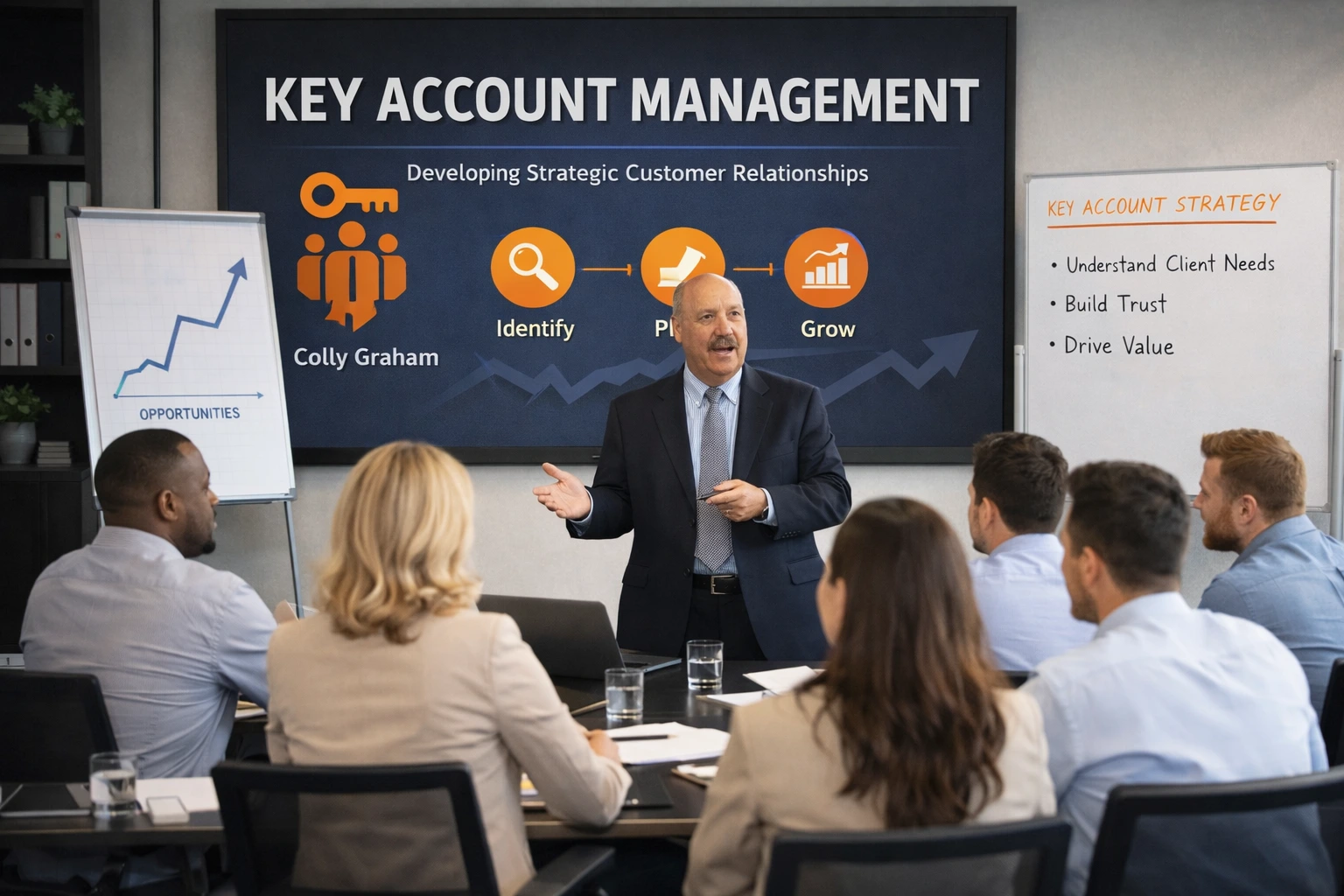
Why Key Account Management
In an era where customer acquisition costs continue to rise, Key Account Management is your greatest competitive advantage — because the companies that systematically nurture, expand, and deeply understand their top accounts will always outgrow the ones still chasing a cold pipeline. Stop hunting and start growing: The revenue you need is already inside the relationships you have.

Key Challenges
Most organisations don’t lose key accounts through poor relationships — they lose them through poor visibility into what’s really happening inside the client’s world. Real-time intelligence isn’t a nice-to-have; for your top accounts, it’s the difference between growing revenue and watching it walk out the door.
Key Account Management Training Modules!!
Module One – Key Account Management
Learn what Key Account Management is and what it is not, positioning KAM as a businesswide management process rather than a sales initiative. It explores the changing role of sales, the concept of customer investment, and the importance of long-term relationship building to maximise return on investment.
Module Two – Identifying and Managing Your Key Accounts
This module focuses on identifying which customers should be treated as key accounts and why, using criteria such as strategic fit, growth potential, and profitability. It develops the skills needed to analyse accounts, assess resources, and plan a structured key account management approach for longterm success.
Module 3 – Strategic Key Account Selection
This module deepens the criteria used to prioritise and segment key accounts based on strategic value rather than revenue alone. It ensures resources are focused on customers that offer sustainable growth, influence, and long-term profitability.
Module 4 – Understanding the Customer Organisation
This module develops insight into the customer’s structure, decision-making units, and internal politics. It equips participants to map stakeholders, identify power and influence, and build multilevel relationships.
Module 5 – Value Creation and Differentiation
This module focuses on creating compelling value propositions that go beyond price and product. It helps key account managers align solutions to customer strategy, challenges, and future ambitions.
Module 6 – Managing Key Account Relationships
This module explores how to build trust, credibility, and longterm partnerships across complex accounts. It addresses communication, expectation management, and maintaining momentum at both operational and strategic levels.
Module 7 – Key Account Planning and Execution
This module translates analysis into structured key account plans with clear objectives, actions, and measures. It ensures plans are practical, aligned internally, and actively managed rather than filed away.
Module 8 – Measuring Performance and Sustaining Growth
This module focuses on tracking key account performance, profitability, and relationship health over time. It reinforces continuous improvement, review discipline, and adapting strategy as the account evolves.
Module 9 – Leading and Embedding Key Account Management
This module focuses on embedding Key Account Management as a disciplined, organization-wide approach rather than an individual role. It addresses leadership, internal alignment, and governance to ensure KAM becomes sustainable and consistently applied.
Module 10 – FutureProofing Key Accounts
This module prepares key account managers to anticipate change within customers, markets, and industries. It focuses on innovation, strategic foresight, and adapting key account strategies to remain relevant and competitive over the long term.
Who Should Attend

Take the next step
Stop managing accounts. Start owning them.
Your highest-value clients deserve more than good intentions — they deserve a systematic approach. Book your Key Account Management Workshop and give your team the intelligence, skills, and strategy to grow the revenue that's already in the room.